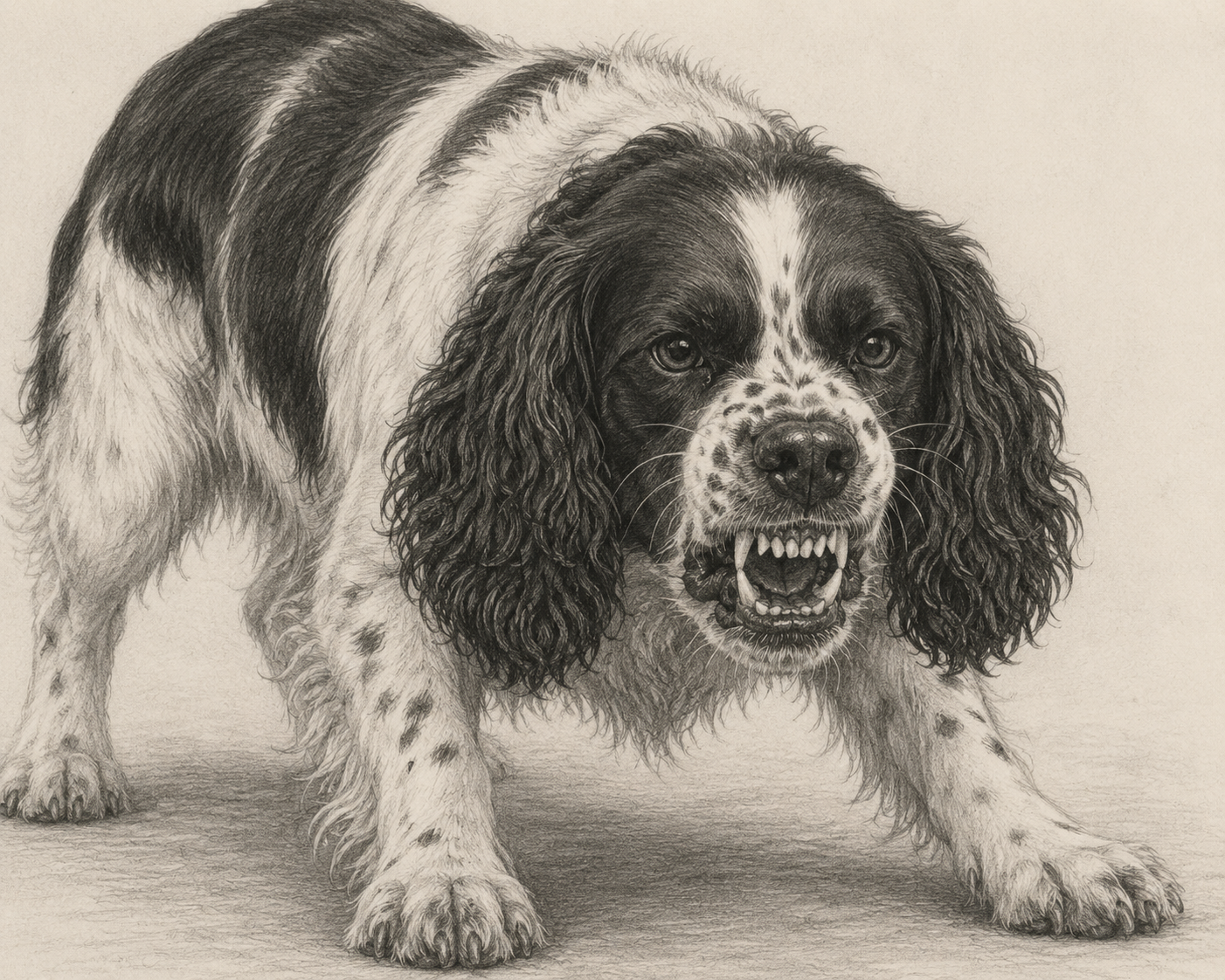
Aggression and Reactivity
Aggression and reactivity are complex behavioural concerns that can have a significant impact on both dogs and their owners. While these terms are often used interchangeably, they are not always the same. Reactivity generally refers to an exaggerated response to triggers such as dogs, people, vehicles, noises, or movement, while aggression involves behaviours intended to increase distance or protect the dog from perceived threats.
Dogs may bark, lunge, growl, snap, or display tense body language when they feel overwhelmed, fearful, frustrated, or unsafe. Many reactive or aggressive dogs are not “bad” dogs. Instead, they are struggling to cope emotionally in certain situations. Fear and anxiety are among the most common underlying causes of aggressive behaviour, although pain, frustration, lack of socialisation, genetics, and previous experiences can also contribute.
Punishment-based methods often increase stress and may intensify aggression by adding fear or discomfort to already challenging situations. Suppressing warning signals without changing the dog’s emotional state can increase the risk of bites. Effective behaviour modification focuses on understanding triggers, reducing stress, and helping dogs develop positive associations with previously difficult situations.
Training plans typically involve careful management, controlled exposure to triggers, and reward-based techniques such as desensitisation and counterconditioning. Dogs are gradually taught that the presence of a trigger predicts something positive while remaining under threshold and emotionally safe. Building confidence, improving communication, and teaching alternative behaviours are also important components of treatment.
Owners benefit from learning canine body language so they can recognise signs of discomfort before behaviours escalate. Preventing dogs from repeatedly practising reactive behaviours is essential for long-term improvement.
Every dog is unique, and aggression cases should always be approached with compassion, professionalism, and safety in mind. With appropriate support and structured training, many dogs can make significant progress, leading to calmer behaviour, improved emotional wellbeing, and greater confidence for both dogs and their families.