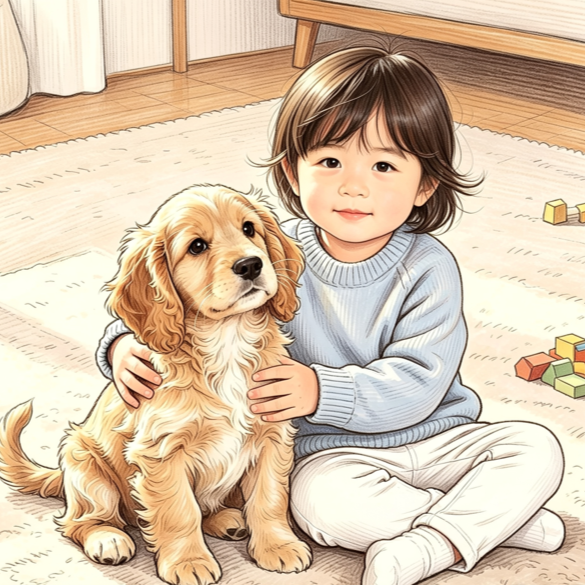
Training Children and Puppies to Engage positively and Safely
Teaching children and puppies how to interact positively and safely is one of the most important foundations for building lifelong healthy relationships between dogs and people. Positive early experiences help puppies develop confidence and social skills, while children learn empathy, respect, and safe handling around animals.
Children and dogs should never be expected to instinctively understand each other’s communication. Puppies may nip, jump, chew, or become over-excited during play, while children may unintentionally frighten or overwhelm dogs through loud noises, sudden movements, hugging, or rough handling. Adult supervision is essential at all times to ensure interactions remain safe and enjoyable for everyone involved.
Teaching children to recognise canine body language is an important part of safety education. Children should learn to notice signs that a dog may be uncomfortable, such as lip licking, turning away, yawning, stiffening, growling, or attempting to leave. Respecting these signals helps prevent fear and conflict.
Puppies benefit from calm, reward-based socialisation experiences that allow them to build positive associations with children. Structured activities such as gentle treat tossing, calm petting under supervision, and short training games help puppies feel comfortable while teaching children appropriate interaction skills.
Families should avoid encouraging rough play, chasing games, or situations that increase over-arousal. Puppies need regular rest and quiet spaces where they can relax without interruption. Teaching children to leave dogs alone when eating, sleeping, or resting also supports trust and safety.
Positive reinforcement training can involve children in age-appropriate ways, helping them build confidence while strengthening the bond with the puppy. Activities such as reward-based recall games, simple cues, enrichment tasks, and calm handling exercises can be enjoyable for both child and dog.
Creating positive and respectful relationships between children and puppies requires patience, education, and supervision. By prioritising safety, communication, and kindness, families can help build trusting relationships that support emotional wellbeing and reduce the risk of future behavioural problems.