Attention Seeking
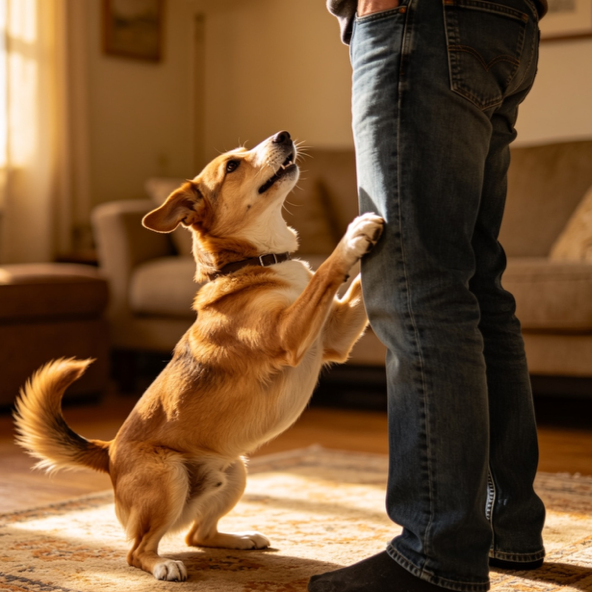
Attention-seeking behaviour occurs when dogs learn that certain actions successfully gain interaction from people. Dogs are social animals and naturally seek engagement with their owners, but behaviours such as barking, pawing, whining, jumping, nudging, stealing objects, or destructive behaviour may develop when dogs discover these actions reliably produce attention.
From a dog’s perspective, attention can be highly rewarding. Talking to a dog, touching them, making eye contact, or even telling them off may reinforce the behaviour if the dog’s goal is interaction. Inconsistent responses can strengthen the behaviour further, as unpredictable reinforcement often makes behaviours more persistent.
It is important to understand that attention-seeking behaviours are not signs of manipulation or spite. Dogs may seek interaction because they are bored, under-stimulated, anxious, frustrated, or lacking sufficient opportunities for appropriate engagement. Some dogs may also struggle to settle independently and become overly reliant on constant human interaction.
Punishment or frustration can increase stress and confusion, particularly if dogs do not understand which behaviours are expected instead. Effective training focuses on reinforcing calm and appropriate behaviours while reducing reinforcement for unwanted behaviours.
Teaching dogs how to relax independently is an important part of treatment. Rewarding calm behaviours such as lying quietly on a bed or engaging with enrichment toys helps dogs learn alternative ways to cope. Structured routines, mental stimulation, exercise, and positive interaction throughout the day can also reduce excessive attention-seeking.
Owners should aim to provide attention proactively rather than only responding when dogs demand it. Scheduled play, training sessions, enrichment activities, and calm affection help meet a dog’s emotional needs while promoting balanced behaviour.
Consistency among family members is essential, as mixed responses may confuse dogs and slow progress. With patience and reward-based guidance, dogs can learn healthier ways to communicate and settle calmly. Supporting emotional wellbeing while reinforcing desirable behaviours strengthens trust and improves harmony within the household.