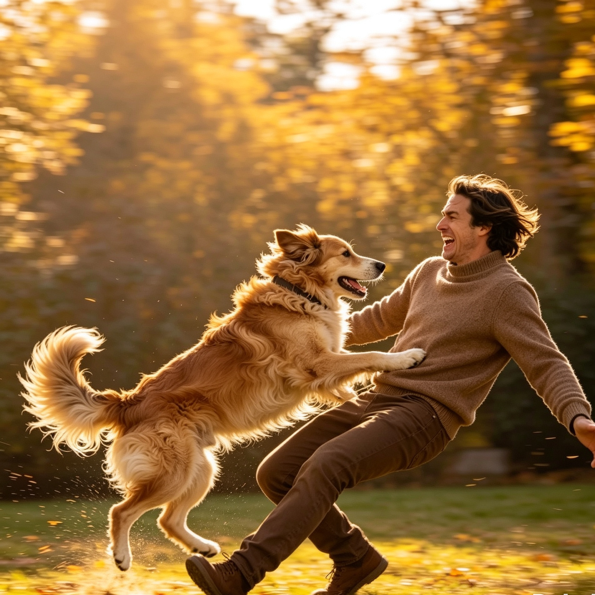
Jumping Up
Jumping up is a very common behaviour in dogs and is often motivated by excitement, social interaction, or attention-seeking. While many owners find it manageable when dogs are small puppies, the behaviour can become problematic as dogs grow larger and stronger. Jumping can be overwhelming for visitors, frightening for children or elderly individuals, and may unintentionally lead to scratches or injuries.
Dogs frequently jump because it has been reinforced, even unintentionally. Human faces are highly rewarding to dogs, and jumping often results in eye contact, touch, talking, or interaction. Even pushing a dog away can still provide attention, which may encourage the behaviour to continue. Some dogs also jump due to frustration, over-arousal, or lack of impulse control.
Punishment-based methods such as kneeing dogs in the chest, shouting, or using physical corrections can increase stress and excitement, potentially worsening the behaviour. These approaches may also damage the relationship between dog and owner. Instead, reward-based training focuses on teaching dogs an alternative behaviour that is more appropriate and easier to reinforce consistently.
Teaching calm greetings is one of the most effective solutions. Dogs can be rewarded for keeping all four paws on the floor, sitting politely, or moving to a designated mat when people arrive. Consistency is vital, as all family members and visitors should respond in the same way to avoid confusing the dog.
Management strategies can also support training success. Using leads, baby gates, or controlled introductions can help prevent dogs from rehearsing unwanted behaviours while they are learning new skills. Providing sufficient physical exercise, mental stimulation, and opportunities for calm behaviour throughout the day may also reduce excessive excitement.
With patience, consistency, and positive reinforcement, dogs can learn to greet people calmly and politely. Building impulse control through kind and structured training creates safer interactions and strengthens the bond between dogs and their families.